Well, that was a roller coaster – Looking back on the mortgage and property world of 2022

As we come to the end of what was one of the most turbulent years in property and mortgages ever, it’s time to look back over our shoulder at what happened this year and what it means right now to homeowners and buyers.

2022, a wild ride for anyone in the property world.

Back at the beginning of this year I suspect we all guessed at what would happen in the property world in the coming months with varying levels of, well let’s be honest here, total inaccuracy. Nobody knew what was going to come along and certainly we all expected things to happen that either didn’t appear, did appear but in a totally different way than we thought they would or did exactly the opposite of what they should have done. It was a unusual year to say the least. 

When you look back at all the events of the year you see series of ups and downs, many of which we have never seen before and some of which were a little bizarre at times. Here are just a few of the, well, let’s just say ‘more interesting’ incidents out of the many that happened in 2022. 

So why did we see such strange times this year?

Well, there was a perfect storm of unique events. As I am sure you remember the government put in place several measures in 2021 designed to boost the housing market in response to the effects of the pandemic. When these were reduced or ended there were dire consequences threatened. We were told that house prices were going to freeze, mortgages were going to be more difficult to obtain and so on. We all braced ourselves for the housing apocalypse and… it didn’t happen. House prices continued to rise and mortgage availability remained good.

After the flurry of sales in 2021, there was a lack of available housing in 2022. Rental prices, combined with the special deals for first time buyers, some fantastic mortgage offers, and the buoyant property market, meant more first-time buyers were looking for homes. The middle of the property ladder had pretty much settled down after the flurry caused by the stamp duty relief as well. As a result, there was a limited number of available properties. That meant sales were fast, and houses were being snapped up in record time.

Interest rates started to rise later in the year in response to inflation and that did lead to a slow down of sales and new mortgages. The war in the Ukraine, Brexit, the cost of covid, the global economic situation and many other factors combined to push the cost of living up and that always reduces the number of people looking to move house. The less motivated sellers and buyers tend to become a little more risk averse in a less friendly economic climate. That said, houses were still selling, and the market continued to move.

Average house prices have soared in 2022 and that means people currently have unexpected equity in their homes. Considering there were dire warnings of prices plateauing in 2022 it turned out the average price of a house in August was around the £315,000 in England, compared to just over £280,000 at the same time in 2021. I don’t know about you, but I think a 35k jump is pretty steep for a plateau.

Then came probably the strangest turn of events of the year. Downing Street became a sort of governmental soap opera. The doings in Westminster and political games are not really our province but it’s clear that the fallout from the recent instability has hit the economy hard. It isn’t worth trying to dress it up, it’s been a shambles at times in Westminster and the impact on house buyers and the mortgage market has been huge. Interest rates are now higher than they have been for years, and houses are not selling as quickly as they used to. We may also be heading into (or actually in) a recession, and it does now look as if house prices are starting to slow down. So, is that the end of the story? Well, maybe not.

What is the state of play right now?

Well first of all, as usual, things are not as bad as you may be seeing in the headlines. As we always tell people when they are looking for a mortgage, the problem with national reporting, is that it is ‘national’. What you see on the news and in headlines is talking about the general situation for thousands of people. You are not thousands of people; you are just the one person with individual requirements. So, if you want the right choices, I suggest don’t pre-judge what your options are and talk to an advisor. The bottom line is that interest rates have driven up the cost of a mortgage, but not as much as you would expect in many cases. The price of houses has not really fallen in any meaningful way, but they haven’t increased for once either. That could mean more options for home buyers because new properties are coming on to the market with steady, predictable pricing. Sellers are also less likely to chance their arm with a higher price in a more stable marketplace. So, from a buyer’s point of view, it’s far from gloom and doom.

The big question – ‘is this the right time for you to buy’.

I suppose the two questions that are uppermost in the minds of buyers now are about price of houses and the cost of mortgages. In both cases the honest answer is that nobody is sure of what will happen next. Interest rates may change, and house prices rises may continue to slow and even drop. However, we said that in early 2022 and many people who didn’t buy then are now looking at a more expensive option. The truth about property is that it is a long game of increasing investment in your house and not a bargain hunt at the local car boot sale. When you are ready to move if you can afford the mortgage, you get a house you want at the right price, and you budget with a safety factor, it is probably never the wrong time to look at moving. Mortgages are still available; houses are still for sale and in a few months’ time the whole situation could be entirely different. Check out your options and see what will work.

In the end it is always about getting the right advice and we will always be open and clear about what is right for you. Sometimes that may well be ‘now is not the right time for you’ and if it isn’t, we will be the first to tell you. The majority of times though we can find a deal that works in your circumstances.

Call us and let’s talk about what is the right thing for you.

Keeping perspective – 6 ways to ease the cost-of-living crunch and interest rate rise

There is no avoiding it, prices have gone up and almost everyone is feeling the pinch. That said, it isn’t all doom and gloom. This will pass (it always has in the past) so rather than get too stuck in the present, let’s try to aim to the future.

6 things you can do to come out of a recession well.

When we are suddenly presented with rising inflation and interest rates, we all tend to shorten our outlook. There is a very good reason for this. We have been threatened with a clear, present, financial danger. That means we all need to stop and take stock of where we are financially right here and right now. So, it’s understandable that we shorten our focus.

There is a danger in focusing on ‘the now’ too much though. Recessions come and go, and the causes of financial problems cannot always be predicted. What we can say with some confidence though, is that these difficulties will pass. So here are a few things you can do that should help now, could make you more financially resilient if the crisis worsens and will help prepare for the better times to come.

  1. Look for the hidden costs in plain sight

What I mean here are the regular payments for things that you don’t use or need. Often these are small costs that mount up. I know because I recently went through mine and noticed a monthly subscription, a payment for low-cost food deliveries, an app roll on cost and a membership to an online service. It wasn’t that I had forgotten about them as such, but I certainly hadn’t really worked out how much they were adding up to each month. They were £8, £5, £3 and £11 respectively. A total cost of £27 a month. My first response was ‘is that all? not a lot then’ Then I worked them out annually. They came to £324. Now I was getting really interested, so I went and looked at other services I really didn’t need. In the end I found just under £600 a year in half forgotten spending. The average mortgage payment in the UK is £753. I was spending nearly a full month mortgage repayment on things I didn’t need and barely remembered having. Not any more… I cancelled the lot.

2. Check your income protection and life insurance.

When we meet people looking for mortgage and other advice, we often need to discuss insurance. It is amazing how often a review of cost and suitability will produce some surprising financial benefits and still leave them with the same, or even better, protection. We should all review things like income protection and life insurance regularly but, as in point one, it’s understandable that we often don’t. A review won’t take long and may well be an eyeopener.

3. Can you switch to a fixed rate mortgage?

This is often a good option when interests are jumping around. There is always the possibility of the rates dropping again, but this way you will know what your cost is for an extended period of time. It’s a real benefit to budgeting and knowing where you stand, but you need the right deal. Call us and we will look at options for you.

4. Can you overpay?

If you are fortunate enough to be in a position where you still have some leeway in your finances, have you considered overpaying? I know this sounds counter-intuitive when budgets are being squeezed but, if you do still have spare income, paying more will reduce your interest over the lifetime of your mortgage. Also, if mortgage rates do rise again, you will be used to paying slightly extra which will soften the blow.

5. Can you do the utilities shuffle and stack?

Of all of the cost of living increases, utilities has hit the hardest. Not only do you need to make sure you are on the best deal, but I suggest you try looking at the companies that offer combined services to reduce overall costs. When you do this, don’t forget to check if they offer fringe benefits like discount cards and so on. These can all add up.

6. Is it possible to extend your mortgage term?

While I appreciate that means it will be longer before you fully own your home, if you have the option for a longer term, it could significantly reduce your payments. It’s not right for everyone though, so we need to talk it through.

As always, we are here to help so if you need advice on your mortgage or insurance, drop us a line or call us.

No returns – The ins and outs of a gifted deposit for a mortgage.

It’s hard to get on the property ladder, and sometimes it’s just as hard to move up it. For many people, the biggest problem they face when buying a new home is the deposit for the mortgage. So, what happens if someone gifts you all or some of that money?

When is a deposit ‘gifted’, and what does that mean?

When you break it right down, all mortgage lenders will want you to show that you can afford the deposit on your new home and that you have the income to maintain the payments on your loan above all else. For many buyers, the deposit is the biggest issue in this process. Even a modest house will usually be edging towards £200,000, which usually means a deposit of £10,000 or more. Saving up an amount like that can take a long time so, in some circumstances, a close family member, usually a parent, will gift the money for the deposit.

Is the promise of a gift enough?

No, sorry, the lender will want to see proof that this is actually a genuine gift, and the money is available.

So that means the person giving you the money must:

  • Have no legal rights over the property because of the gift
  • Not be loaning you the money in any way. If it is considered a loan, you may be refused the mortgage, and it will almost certainly be counted in your outgoings
  • Have no expectation of repayment

Is that all you need?

Yes and no. Mortgage lenders will usually take a gifted deposit as proof that you have the money to put down on the house. Seems simple enough, right? Well, yes, it is, but there are some things you need to remember.

  • Your relationship with the person gifting can make a difference.

Usually, the lender will accept close family but may not be so keen to lend in other circumstances. Parents and grandparents are common sources of a gifted deposit, and siblings may also be acceptable. When it comes to more distant relatives and friends, the lenders may well be a lot more wary.

  • It doesn’t need to be the full amount of the deposit.

Sometimes people make the mistake of thinking the deposit can only come from one source. This is absolutely not true, and a gifted deposit can be part or all of the money you need. However, all the rules will still usually apply regardless of the percentage of the deposit being gifted.

  • If you are buying your benefactor’s house.

This complication does come up occasionally when parents are looking to downsize or still live with the children in the same house. Most lenders will see it as more of a reduction in the sale price rather than a gift. It may still be possible to get a mortgage, but we will need to look at the best options.

  • You will need to prove it is a gift.

This basically means the person gifting the money will need to put it all in writing. For some lenders, this will be a form that needs to be completed. In some cases, though you may need to budget for a solicitor to draw up a legally binding letter to satisfy the mortgage company. Either way, it will need to confirm in a legally binding way:

  • The amount of money to be gifted
  • Who is gifting and receiving the money
  • That the gift is not a loan and the person gifting the money is financially solvent
  • Usually, it is here that they will state they have no claim to the property because of the gift
  • The letter or form will also need to show the source of the money, usually, this will be savings, but it potentially could be other sources.

Assuming all this is available, you should be able to go ahead.

Are there any potential issues or difficulties?

Sometimes there can be a few sticking points for some lenders. These usually revolve around clarity about the interest in the house. Some potential sticking points could be seemingly small things, like if the person gifting the money intends to also live in the house. This is not an uncommon scenario with elderly parents or grandparents. We will need to look at this carefully if that is going to be the case.

You should also consider if the gift will be subject to inheritance tax if the person gifting the money passes away and has an estate of more than £325,000.

As with any mortgage-related decision, you need to know exactly where you (and in this case, the person gifting the money) stand before you go ahead. That said, a gifted deposit has helped many people into their ideal home.

Call us if you are getting help from someone with part, or all, of your deposit, and we can work to get you the best deal.

Should you consider let to buy if you want to move house.

You are probably familiar with buy-to-let, where you purchase a second property with the intention of renting it. But what if you want to move home as well as become a landlord?

What is ‘let to buy’?

We sometimes find that when we suggest let to buy as an option people find the concept a little odd. We tend to think about our relationship with our property in three ways

  • We rent and try to get in a position to own our own home
  • We have a mortgage and own our own home
  • We have a mortgage and own our own home as well a further new mortgage for a property we rent out.

Traditionally, when we want to move house, we sell the property we own and buy a replacement home. However, why should we sell our old home? With let to buy, you could rent your old home out and potentially become a landlord with a rental income. In effect, let to buy adds a fourth option to the above

  • We rent our old home so we can move to a new one and own both houses

With a let-to-buy process, you get the home you want and a second income from your old property.

What happens with a ‘let to buy’?

The process is actually quite straightforward and there is less to go wrong than with a standard house sale and move.

  • Your find a home you want and follow the usual process to arrange a buy
  • Once you are ready to move, your current mortgage is switched to a buy-to-let one
  • Simultaneously you take out a new mortgage on your new home.

It’s as simple as that really. Not only do you get to move, but you are also reducing the chances of delays in the sale chain by being two of the links yourself.

Who should consider ‘let to buy’?

I suppose the obvious place to start is that you need to want to move to a new home. Other reasons include:

  • You want to temporarily move to a different area
  • You want to downsize but keep your old home as an investment
  • You found a property to move into, but you are struggling to sell your current one
  • You want to use the equity in your current home to help you onto multiple ownership
  • You are part of a couple where both partners own a property

In short, if you want to move and keep your old home as an investment or intend to go back to it at some point, then it is well worth considering.

Things to think about

As with all property decisions, let to buy is a long-term commitment and you need to really consider your options carefully.

  • Are you ready to be a landlord? Make sure you understand what that will mean
  • You will still need to meet the basic criteria for a mortgage application
  • Your rental income may vary but you will still need to meet the cost of both mortgages
  • There may well be stamp duty to consider

Let to buy isn’t for everyone, but if it is right for you, it can really solve a problem and help you become the owner of a second property.

Need further help with this? Call us and let’s discuss your options!

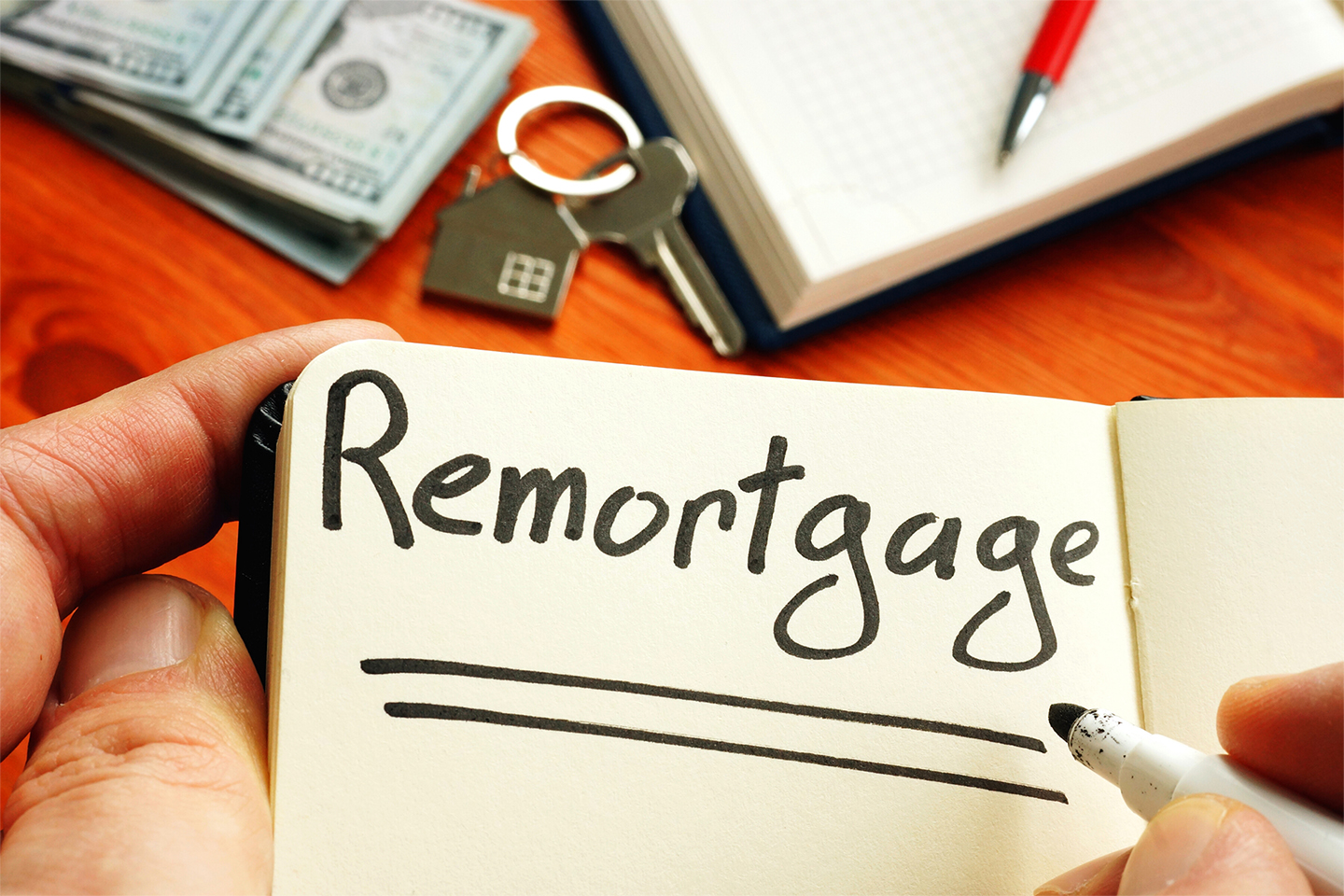
To Re or not to Re (mortgage that is) – is remortgaging the right option for you?

For most of us our mortgage is our single biggest outgoing. So, it makes sense to occasionally review your options to make sure you are getting the best from it. In many cases that means looking at a remortgage. So, what does that actually mean, and what should you be thinking about.? 

What exactly is remortgaging? 

When we talk about remortgaging what we usually mean is either moving your current mortgage commitment to another provider or looking to borrow money against property you currently own outright.  

Firstly, before we discuss anything else, I want to be clear about the importance of your mortgage. They are not something to be taken lightly and it is absolutely vital that you always understand what any changes mean. When you take out a mortgage it is one of the longest-term commitments you will ever make and will play a part in your life for years to come. Remortgaging then, is a very serious decision. However, it is not one you should shy away from because, as long as you are doing it for the right reasons, it can be a good thing for you financially.  

So, is remortgaging right for you and should you consider it? 

Is it worth looking at remortgaging? 

If you are in a position where you can consider moving your mortgage, then you should at least look at your possibilities. There is absolutely nothing to lose by looking at your options. Just make sure you fully understand what they are get the right advice. 

Who should be looking at remortgaging? 

There is a temptation to say ‘everyone’ in answer to that question but there are some people who will suit remortgaging better than others. The first question to ask is if you are in a position to look at remortgaging in the first place. In some circumstances you may need to pay a fee for moving your mortgage, and as with all lending you will still need to demonstrate you can afford the new mortgage. 

Why do people talk to use about a remortgage? 

There are many reasons but 6 of the more common ones are. 

  1. Looking for a better deal 

This is very common, but sadly it is also a real opportunity to save money that people sometimes do not explore. Lenders want to attract your business, so remortgaging is usually worth looking at to see what you could save. 

  1. You are on a deal that is about to end 

One of the unfortunate results of something as regular as the mortgage payment, is that paying them becomes a habit. Often that means that people just slide from their initial deal onto a standard mortgage. If you are on a mortgage deal that is coming to an end, then it is very likely time to start looking at what is available with better terms.  

  1. Your house has a lot of equity because of an increase in value 

Why does this matter? Well, when a mortgage is offered the value of your potential equity in the house contributes to the interest rate. So, if you are in a position where your remortgage will be considerably less than the potential equity in the house, you may be able to access a better deal.  

  1. Your current lender is reluctant to lend you more 

It can happen that your current lender is not so keen to change things for a whole host of different reasons. Let’s chat about why and see if there is another option. 

  1. What used to be a good fit is now not so comfortable 

As we go through life our financial situation changes. What worked for you when you took the mortgage may now no longer fit your situation. You may have, for example, considerable savings, come into a windfall such as an inheritance, a much higher income. Perhaps you are looking to change to a mortgage that will allow you to pay more off your outstanding amount. As your circumstances change your mortgage should ideally change to fit them.  

  1. You are worried about an endowment mortgage. 

If you are still on an endowment mortgage that you took out some time ago it’s worth reviewing it. Some endowments are possibly not going to do what they were originally expected to do, and you may have a considerable shortfall when it comes to paying off your mortgage as it ends. 

The important thing is to make sure you are taking the right road. Remortgaging is not for everyone. If you have a very bad credit rating, a low current mortgage value or your circumstances have changed for the worse, then remortgaging may not be the right option or may not be beneficial. That is not to say that it isn’t worth looking at your possibilities, but realistically you may not be able to get a better deal. 

As always expert advice is the best guidance so call us and we will see how we can help.  

Living out of lockdown – How the pandemic has changed what home means.

Life has been changed by the pandemic in many ways. Not the least of these is the shift in perspective on what we see as being the right home. Whether you are a first-time buyer, a mortgage free couple looking to downsize and retire or anything in between, the property market is a different place. It would also seem that our view of what makes a perfect home has changed in many ways.

Better kept houses on the market

Undoubtedly the biggest impact on our home life for many people has been how we use our living spaces. For months at a time, we found ourselves restricted to a series of rooms. Essentally we were permanently living in a place that we normally consider somewhere we would return to. This may have created an enforced over familiarity with these living spaces. Combined with having more time on our hands than usual it seemed to create a to a sort of national wave of DIY and decorating during lockdown. When the housing market opened up again this meant people were viewing houses where many of the little ‘fixer upper’ bits that were normally there had been already ‘fixed up’. This probably took a little hesitation out of some purchaser’s decisions and pushed sales through. Buyers with an approved mortgage were, and still are, being unusually quick to make a purchase. FOMO is seemingly a big factor. In fact, the biggest delay in moving during the pandemic was often the backlog of paperwork caused by the sheer volume of sales in the months following the periods of lockdown.

Moving out to the country

In recent survey by the London Assembly looking at how Covid had changed the residents’ views on their housing situation, four out of 10 respondents said they wanted to move to a new home and 34% of these wanted to move out of the city. This seems to reflect the market in general with the population of most major cities falling. It would be naive to point to a single reason for this seeming exodus from cities, but the pressure of living with lockdowns has certainly been big a factor. The temptation of green, open spaces, when you are confined to your house is a strong one. The population of our cities is rising again but during the pandemic 100s of thousands of people moved to greener pastures.

House prices and stamp duty created a perfect sales storm.

The stamp duty holiday, the then (and continuing) favourable conditions for first time buyers and the pandemic all combined to create a never before seen market for house sales in 2021. To put some perspective on how big that change was, in Jan 2021 there were around 83,000 residential house sales in the UK. 6 months later in June 2021 that number soared to just under 190,000, more than doubling in less than 6 months. House prices rose an incredible 11% over the year and the stamp duty holiday released properties into the market at an incredible rate. This was always going to slow down, but to the surprise of many, it has not slowed by anywhere near as much as was expected. It would seem that the post-pandemic desire for a new home is still active in the market, and strong enough to maintain itself even with higher prices and the return of stamp duty.

The desk shaped elephant in the room.

With all the talk of stamp duty, the desire to leave cities, and increasing house prices, it is easy to underestimate the impact one Covid related factor continues to have on the housing and mortgage market. In 2020, 37% of us worked from home. The majority of home workers are 30 – 49 year olds and likely to be home owners. The effect of this is that more potential buyers are looking for spaces that will accommodate a pleasant home working environment. Spare rooms, additional spaces, room to build extensions and out houses that are ripe for conversion, have all suddenly been elevated in importance. Hybrid working is now commonplace so working from home is going to continue to influence the buyers for the foreseeable future.

In the final analysis, there has clearly been a change in the way we all see our homes over the last few years. Whether consciously or not buyers and sellers have been affected by the pandemic in far reaching ways. As our needs change, the property will inevitably change with then. Mortgage companies are certainly responding to this new environment and there are currently a range of deals available wherever you are in the chain.

Call us and let’s discuss how we can help you make the most of the post pandemic housing landscape with a perfect mortgage deal.

Green mortgages – the ‘what’ and ‘why’ of the greener option.

Everyone wants to be a little kinder to the environment these days and green mortgages are part of that revolution. Eco-friendly and green options have become more than just buzz words in the last few years, they have become something many consumers look for in their products. The green agenda and a desire to do our bit for the environment has gradually moved into the mainstream. As we see more and more of the effects of global warming and our awareness grows, we are looking for more products to play their part. However, there is still a lot of misunderstanding around what a green mortgage is and what they mean to the consumer.

A green mortgage is designed to encourage people to choose an energy efficient property. Domestic housing plays a huge part in the creating of CO2 emissions in the UK. While the majority of the Carbon Dioxide which contributes to global warming comes from industry, domestic housing produces over 20%* of the total. Clearly this cannot be changed overnight but that doesn’t mean there is no point playing our part. Reducing the CO2 we produce is a long game not a sprint. The thinking behind a green mortgage is to incentivise home buyers to choose a new home that meets certain criteria for low carbon emission housing. If it does this then the mortgage will attract a discount or financial incentive as a green option.

What are the practicalities and advantages of a green mortgage? 

Firstly, to qualify for one you will need to prove that the house you are intending to buy hits the required benchmark for emissions. Every house that is sold or leased in the UK must have an EPC. This is the Energy Performance Certificate, and it records the energy rating for the house. You will need your new home to have an EPC rating of at least B to qualify for a green mortgage. The first thing to think about from this is that many older homes will not be able to meet this standard. New dwellings are built with the EPC in mind but older homes, a rough benchmark would be those built before the introduction of EPC regulations in 2007, may well be too low. Once you have found an A or B graded house you can use the EPC as proof and apply for a green mortgage. That doesn’t mean you should completely disregard looking for an older green home though or thinking about a remortgage. It may well be that your existing home can be upgraded, and many properties are now being brought up EPC ‘B’ standard to enhance their appeal to prospective buyers.

The incentive you receive will vary but usually they are in the form of a cashback deal or a fixed rate lower interest mortgage. As with all mortgages the deals fluctuate and some are better than others in the short term, for example cashback deals, or provide consistent savings over 2 – 5 years. Whatever the best deal for you, the purpose of a green mortgage is to incentivise you financially, so there will always be a nice reward for being green.

If you would like to look at what is involved with a green mortgage, why not call us and we will have a chat. As well as the potential saving on your monthly payments or a nice lump sum of cash in the bank, you will have the satisfaction of knowing that you are in a home that is, in its own way, helping the environment and is costing less for your energy bills.

Source: 2020 UK greenhouse gas emissions, provisional figures.

The Housing Market in 2022: Almost certainly not more of the same!

As we head towards what will hopefully be a normal Christmas and the end of 2021, it’s difficult not to want to look ahead. There are a lot of questions about mortgage availability and costs, house prices, upturns, and downturns in markets and about property in general that need to be considered. After last year I cannot help but think about how people sometimes joke about trying to knit fog. After the last two years, I think we all need to accept that the property space has been, and still is, a little unusual to say the least. However, while predicting what will happen next has been a bit like trying to knit fog, with wool that keeps changing colour and no knitting needles, the coming year will hopefully be a little more settled.

Mortgage interest rates and availability

The big change in this area is likely to be around interest rates. We have been living with very low-interest rates on mortgages for well over a decade. During Covid, we saw the Bank of England base rate drop to a record low. While this is great for homebuyers because it drives the cost of monthly payments down, the bottom line is that we are currently seeing incredibly low rates and there is pretty much a consensus that this cannot continue forever. The question then is not whether interest rates will rise but more about when, and how much they will rise. The good news is that we foresee them rising only a little bit (if at all) during 2022 – so we’ll still have incredibly low-interest rates. In the perspective of recent months, it is a change but when you consider in the 80’s interest rates were as high as 17% at one point, you realise that we are still very much in a low-rate market.

As to availability, I don’t see any change of significance. If the higher interest rates do impact the movement or mortgages, then the lenders will probably respond with attractive offers such as fixed-rate options to even things out. The same golden rule will still apply, if you can afford the mortgage, you should be able to get one.

House prices up or down?

Well, this one is causing some debate. We have seen two years of unprecedented and rather unexpected levels of growth. Despite all the naysayers, house prices continued to rise at the end of the stamp duty holiday and are still doing so. We can probably expect this to continue. Several factors such as the return to stability after the pandemic and a general shortage of houses on the market should keep prices buoyant. Overall, the rise may not be as meteoric as 2020/2021 but we will probably see a 2.5 – 3% increase overall. Some spot areas will see more and if the move from cities continues then there could be some bargains available.

Will there be available houses?

This one is far more difficult to predict. The government is currently very much behind new builds, and there the encouraging prices could be mean more movement up the chain, releasing housing for first-time buyers. Overall, yes, there could well be availability later in the year, but chances are it will remain static or possibly even decline slightly.

When should I look to buy and get a mortgage?

Nothing is certain but if I had to make a prediction I would say in financial terms, as soon as possible. If you are looking to move or thinking about buy-to-let, I don’t see anything suggesting there would be an advantage in waiting until later in 2022. It is almost certain that we are not going to see a radically changing market and ‘more of the same’ is not on the cards at the moment. In a more stable market, with no sign of shrinkage on price, the sooner you buy the better. Take advice on your situation though and, as always, put everything in perspective before you decide.

We are always happy to discuss things with you so call us and let’s see how we can help.

Well, that was a heck of a ride! – Looking back at the housing market in 2021

If you were forced to come up with a single word to describe the housing and mortgage market in 2021 you would almost certainly find yourself using some variant of ‘strange’. Let’s not beat around the bush here, 2021 was the oddest year in recent memory and was crammed, almost from day 1 with unusual circumstances, unexpected twists and turns and unforeseen events. In terms of the housing and mortgage space, 2021 has been a bit of a high-speed ride and even the most respected of thought leaders have found themselves clinging on and seeing where the ride takes them at times. It was a year where prediction became almost impossible as the market defied expectations at every turn. 

What ‘did’ happen in 2021 for the housing market. 

We began the year with a stamp duty holiday still in place. Initially implemented in 2020, Chancellor Sunak introduced it to help get the property market moving after the initial lockdown period. It certainly did that. Despite the third national lockdown at the start of 2021, the housing market was booming. Sales were going ahead in huge numbers. In fact, the stamp duty holiday was so successful in creating a market surge, that by budget day in March it had been extended. Partly this was to cope with the backlog of paperwork in the system after the boost created by the initial surge in sales. In September of 2021 after a phased ending, the scheme finally closed. 

For the first time buyer, things were pretty rosy. They benefited from both the government offering of assistance in the form of help to buy and the fluidity of the market. The practical upshot was a 5% deposit requirement and many new and older houses to choose from. As a result, hundreds of thousands of new buyers were able to access the property ladder more easily.  

For the existing homeowner, the market had a few additional surprises as well. The boom in sales combined with the stamp duty holiday had a remarkable effect on the average house price. By the beginning of the year, the average house price had risen to just under the £250,000 mark compared to around £232,000 at the start of 2020. At the end of the stamp duty holiday just as everyone quite reasonably expected, this meteoric rise in price slowed. It even dropped a little in June. Then along came the sunshine in August and with it came a surprising price increase again. By the start of autumn, the average house price had risen to an all-time high of just under £263,000.  

What didn’t happen in 2021 

Top of the list of things that didn’t happen has to be that mortgages did not (as some of the more pessimistic predictions said) become extremely difficult to obtain. It is fair to say that in some cases, such as complications caused by furlough, it was necessary to work a little harder to secure the mortgage some people needed, but it was far from impossible. Despite the worries that the lenders would pull up the drawbridge on lending as long as the applicants could provide the required information, mortgages were still going through just fine. Interest rates stayed low which meant thinking ahead and planning for a potential rise when considering your finances, but we always talk through this with our clients anyway. The bottom line is still the same, if you can afford the repayments, you have the right circumstances financially, and you choose the right house, then you should still get a mortgage. 

The other big thing that didn’t happen as of writing this article, is the ‘big bust’ that some expected after the boom of the stamp duty holiday. The price rise may be smaller, but the housing market is still extremely buoyant. Even if we do see a slight drop, for many homeowners, the increase over the year will still leave them in the rather comfortable position of having a good amount of equity in their home. 

In summary, then 2021 was a real thrill ride when it came to the housing and mortgage market. However, as we always say, the more things change the more they stay the same. We are still here to guide our clients to the right solution and help them get the mortgage they need. When the market is behaving in such a volatile way and with the unexpected almost becoming commonplace, it’s doubly important to talk to an advisor if you are considering a mortgage. We are only a phone call or an email away if you need us. 

Conveyancing, stamp duty and someone with a van – the cost of moving home.

Once you have found your perfect home, you will need to arrange a few things before the move. The best mortgage deal all squared away and properly arranged on the house you are buying is going to be top of the list. Without that in place there will be no move at all. Although the mortgage company will need to offer against the house you intend to buy, you can usually check your position and the likelihood of getting the mortgage ‘in principle’ in advance. Speak to us about this as soon as you are thinking of buying a new home, and we will advise you on the best course of action and timings for the mortgage being ready to go. For the moment, let’s assume you are all set to move and look at what expenses you may need to think about. 

Legal fees, selling or buying costs and the actual physical move itself will all have an attendant price tag. The best option is to be aware of what they potentially are. That way you can budget for them well in advance.  

  • If you are buying a house: 
  • Conveyancing-This is the process of transferring the ownership of the house. Often this cost is paid in stages, so make sure you know when each one is due. In total, you can expect a cost of £800 – £1200 for the average UK house. 
  • Stamp duty- This will depend on the cost of the house and whether you are a first-time buyer or not. Now that the stamp duty holiday is over, rates are back to normal. First-time buyers are still exempt for properties valued up to £300,000 for other buyers; it starts with properties valued over £125,000. You must use a stamp duty calculator to check exactly how much you’ll have to pay. It is important to bear in mind that stamp duty increases rather exponentially as the value of the property increases and settles at 12% on values over 1.5 million – don’t leave it to an approximate calculation. 
  • The surveyors and valuers will add around £500 and £250 respectively on average. 
  • Van hire (depending on how much stuff you have and how far you are moving) can range from £300 to £600 for the average house but could be more. If you prefer to use a moving company instead, the cost may start from £500 with around £1200 being the average. 
  • If you are selling a house: 
  • In many cases you will need to have the Energy Performance Certificate (EPC) at around £80. 
  • Again, there will be a conveyancing cost of around £1000 
  • Additionally, the estate agents may charge a fee anywhere between 1% and 2% depending on the price of the house you are selling. There are some online and high street estate agents who offer fixed price deals, however. 

The rest of the cost will be made up of sundry small items such as packaging materials, redirecting your post, utility changes and so on. So, if you are selling and buying as part of your move you will probably need to budget for all the moving costs listed above – and that’s two conveyancing fees, one for the sale and one for the purchase, although you may get a discount if you go through the same conveyancer for both sale and purchase. 

Every move is different, though, and the total cost will vary. It’s important to know what it will be. The key is to carefully plan ahead in advance to make it as stress-free as possible. 

So, will it be worth it? Well, I suppose you must ask yourself what the house means to you to answer that question. As you sink into your sofa in your new home for the first time with a nice cuppa or glass of bubbly, I think you will consider it all worth it. 

If you want to find out about the best mortgage deal, or just need help planning, give us a call.